|
Puccini and il Verismo
part II
For Puccini's next three operas La Bohème, Tosca and Madama
Butterfly, he had the librettists Illica and Giacosa. There was
always a set division of labour between the two. Illica would look
after the scenario and invent picturesque details while Giacosa
would look after the poetic side and the versification of the
prose text. There were terrible arguments between the librettists
and composer, who was known to be a hard task master.
Giacosa threatened to resign a number of times, but in the end Puccini won, for he knew what would make the most impact on stage.
From the merest hint in Prévost's novel, Puccini developed the embarkation scene of Manon Lescaut,
a most unique scene in all opera, he invented the spine-chilling man hunt in La Fanciulla del West,
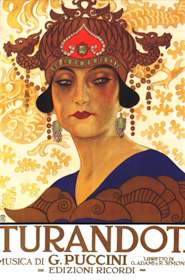
and created the character of the slave girl Liù and the scene of her suicide in Turandot.
Added to this, Puccini had the gift of inventing a liquescent, melting melody, the morbidezza of
the typically Puccinian cantilena is irresistible in its effect; there is his magisterial treatment of the
singing voice and there is his masterly exploitation of harmonic, rhythmic and Orchestral devises.
Technically he always kept abreast of the innovations of his time, with Wagner, Debussy and
Stravinsky as his main guides.
It is the accumulation of such gifts which makes Puccini the most important Italian opera composer
since Verdi. Puccini heroines are nearly always more important than his heroes -- seven of his
twelve stage works are called after the name of the heroine.
La Bohème was first performed in Turin 1st Feb 1896: it was not well received by the critics who
had come expecting an opera in the rich romantic vein of Manon Lescaut, whereas the new work was
for the most part a light conversational style of opera, touching on realism. For many musicians of
today the opera that ranks as the composer's masterpiece. Tosca, first performed in Rome on
14th Jan 1900 was Puccini's first excursion into pure verismo.


|





 contact
 View opera LA BOHEME